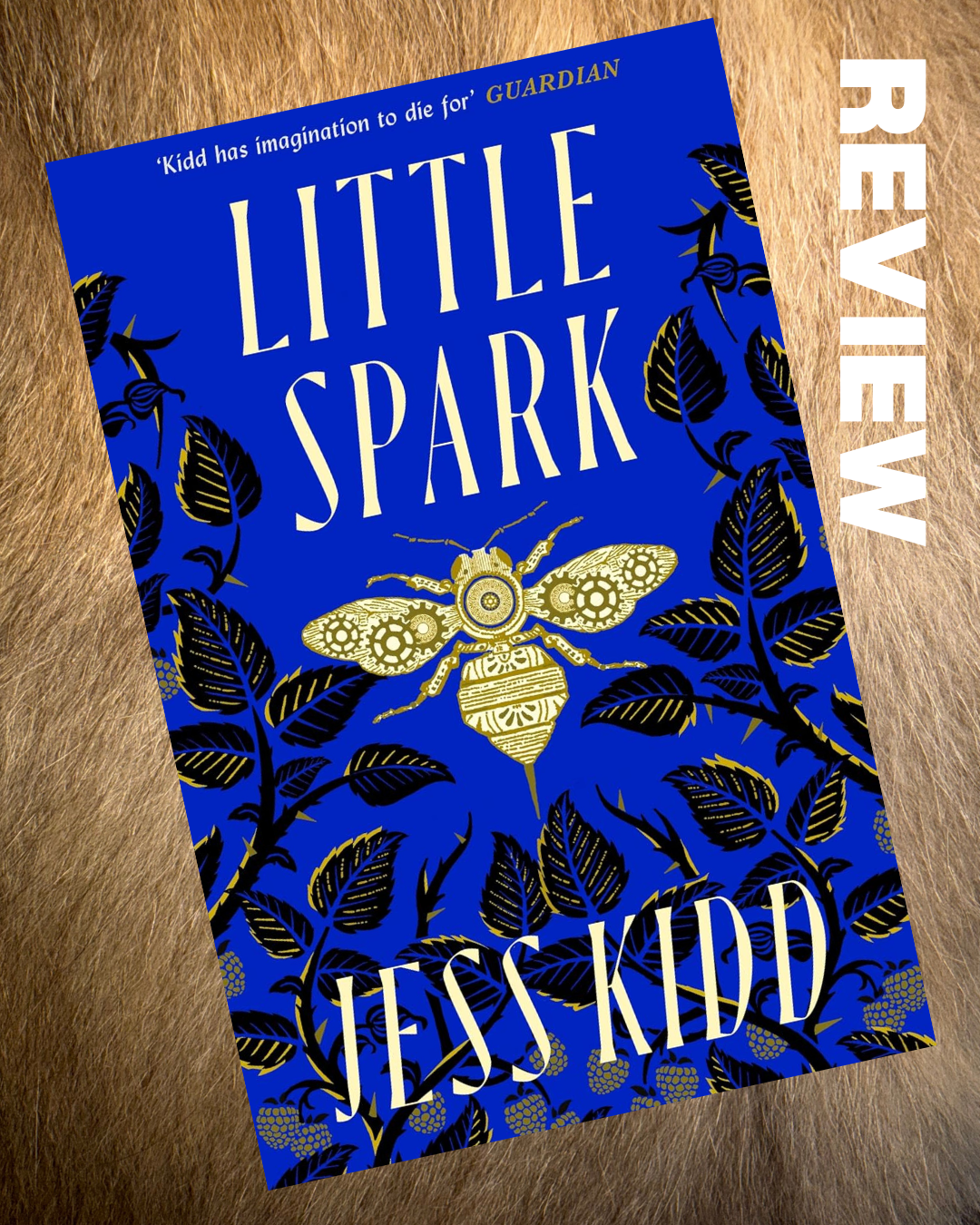
Sometimes, if you’re lucky, you’ll come across a book that’ll grab you by the soul and not let go. A book that’s so beautifully written, it’s hard to write a review because I know my words won’t do it justice. Little Spark is that book for me, and has immediately become my favourite read of the year so far. A twisty, victorian-era set, gothic mystery that just captivated me from the start.
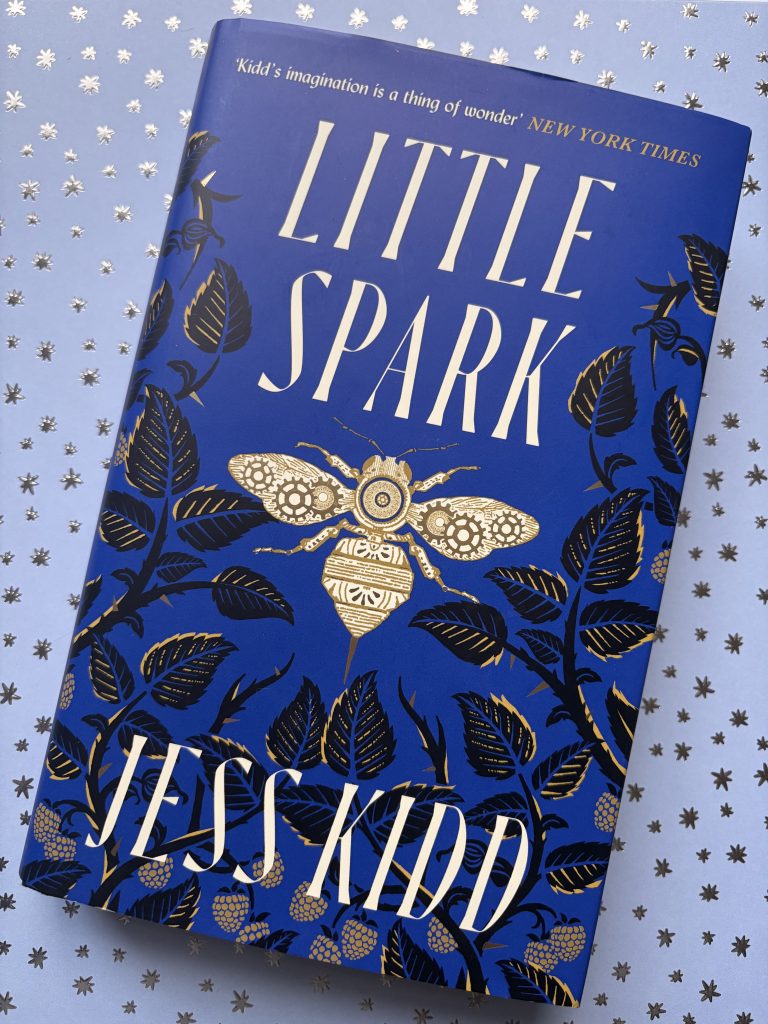
We first meet Bodkin Bell in 1865, and she’s a strange child. Living with her guardian, Cornelius Bell, she never gets a straight answer as to how they came to live together. Cornelius is a showman, and together with Bodkin, they put on parlour shows to grift a living. Because Bodkin generates electricity that can shock anyone that touches her, hence her show name, Little Spark. There’s something reminiscent of Terry Pratchett’s Tiffany Aching about Bodkin, a child wiser than her years, curious, seemingly other, seeing life as an outsider. Being autistic, I resonated with her so much. Having to be conscious of how to read people, cataloguing facial expressions, avoiding human contact, or having to be mindful of your own reactions when being touched – it all felt so familiar.
The novel then jumps to some years later, after a fatality at one of their shows, and Bodkin is in the gaol work house, Cornelius missing. Bodkin is given the chance to serve her remaining sentence as a beneficiary of Lady Haseley’s philanthropy, working at a remote Kent property known as Point Mote. Surrounded by marshland and nowhere to run, Bodkin is to join the household as an assistant to Lady Haseley’s nephew in building automata – machines crafted to replicate living things. The family are reclusive, with a minimal staff of quirky characters. Nothing about the family, the staff or the house is what it seems, and makes for a quirky, eerie, gothic tale.
Having been peddled stories all her life, Bodkin is determined to get to the truth of why she’s really at Point Mote, her need for answers greater than her urge to escape. There are plenty of twists and turns along the way, and it’s a captivating read.
I thoroughly enjoyed Jess Kidd’s Nora Breen mystery series, so it wasn’t a surprise that the world inhabited by Bodkin is so vividly crafted – it was so easy to become immersed in her world, and I just love her as a main character. Despite the wildness of the fens, and the size of Point Mote, the atmosphere feels oppressive, claustrophobic, the automata creepy. The descriptions of the fens and the nature surrounding Point Mote is a stark contrast to the Haseley family’s work with automata. Machines replicating life but only going through the motions – the descriptions could so easily apply to neurodivergent masking. What does it mean to be alive?
While this is a novel set over a century ago, I’ll be thinking about it a lot for a long time yet.

Leave a Reply